Key Takeaways:
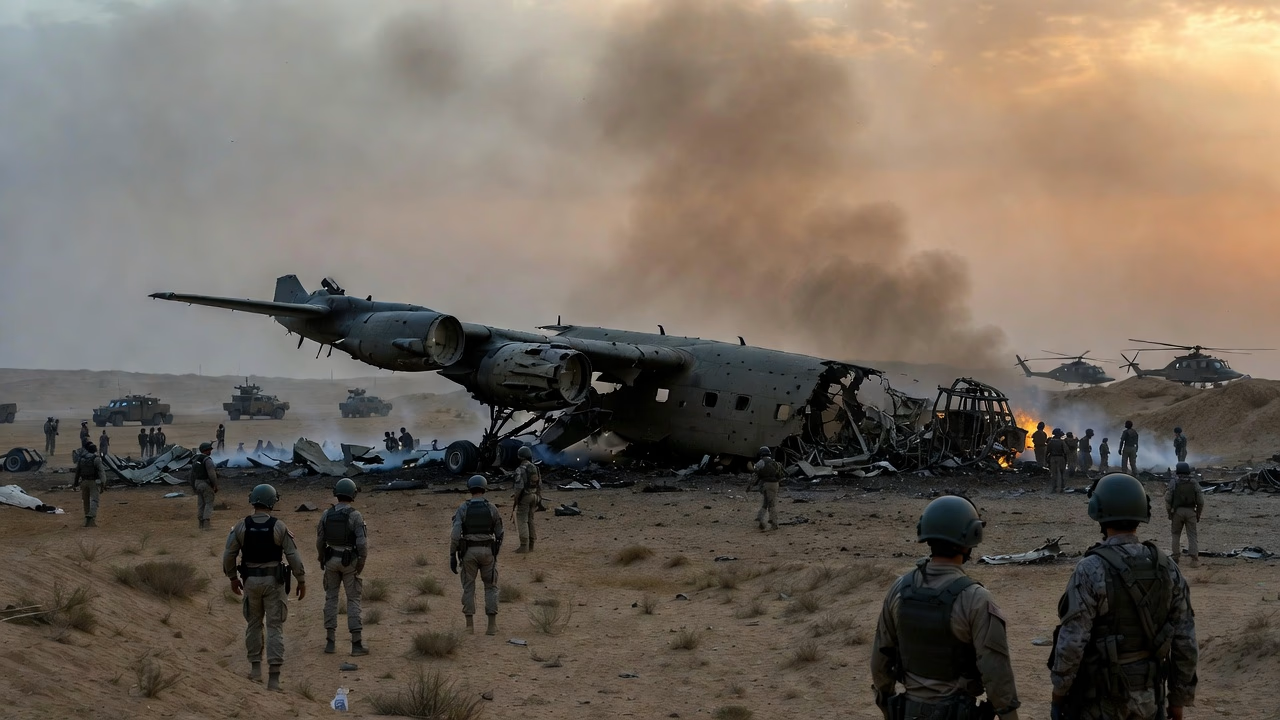
- A U.S. Air Force KC-135 Stratotanker, a critical aerial refueling aircraft, tragically crashed in Iraq, resulting in the loss of all 6 U.S. airmen aboard.
- The incident occurs against a backdrop of intensely volatile and escalating regional tensions, with particular focus on the complex relationship between the United States and Iran.
- Conservative commentator Pete Hegseth made a controversial, unverified statement suggesting Iran’s leader was “likely disfigured,” further fueling speculation amidst the heightened geopolitical climate.
- The crash serves as a somber reminder of the inherent dangers and human cost faced by military personnel operating in the Middle East.
The Middle East has once again been rocked by tragic news, as a routine mission turned deadly for the U.S. military. A KC-135 Stratotanker, a vital component of aerial logistics, crashed over Iraq, claiming the lives of all 6 U.S. airmen on board. The devastating loss, confirmed by U.S. Central Command, casts a dark shadow over an already fraught geopolitical landscape, where tensions between the United States and Iran continue to simmer.
Tragedy Strikes in Iraqi Airspace
Details surrounding the crash of the U.S. Air Force KC-135 Stratotanker remain under investigation, but the outcome is unequivocally tragic. The aircraft, designed for mid-air refueling and cargo transport, is a workhorse of military operations, making the loss of both the plane and its entire crew a significant blow. The 6 U.S. airmen who perished were engaged in a critical support mission, highlighting the continuous risks faced by service members deployed in volatile regions like Iraq.
This incident is a stark reminder of the sacrifices made by military personnel who operate daily in challenging environments, far from public view. Their dedication, often requiring adherence to rigorous training and the power of small daily habits, ensures the complex machinery of global security continues to function, even as they face unexpected dangers.
Escalating Tensions and Provocative Claims
The timing of this tragedy is particularly poignant, occurring amidst what many observers describe as an increasingly precarious and escalating Iran-United States conflict. The region has been on edge, with various factions and proxy forces contributing to a sense of instability. Against this backdrop, news commentator Pete Hegseth’s recent comments—claiming that Iran’s leader was “likely disfigured”—have added another layer of controversy and speculation to an already incendiary narrative. While the veracity of such claims remains unconfirmed, they underscore the charged atmosphere and the rapid dissemination of information, and misinformation, in times of crisis.
The Broader Geopolitical Context
The presence of U.S. forces in Iraq is intrinsically linked to broader strategic interests in the Middle East, often intersecting with the intricate web of alliances and rivalries that define the region. The crash, while possibly an accident, cannot be entirely decoupled from the ongoing heightened readiness and operational tempo driven by these tensions, especially concerning Iran’s regional activities and nuclear ambitions. The human toll of such incidents serves as a powerful testament to the real-world consequences of geopolitical maneuvering.
As the investigation into the KC-135 crash proceeds, the focus will undoubtedly remain on ensuring accountability and understanding the cause. Yet, the broader implications—the fragility of peace, the cost of conflict, and the constant vigilance required in global affairs—will continue to resonate across the international stage.