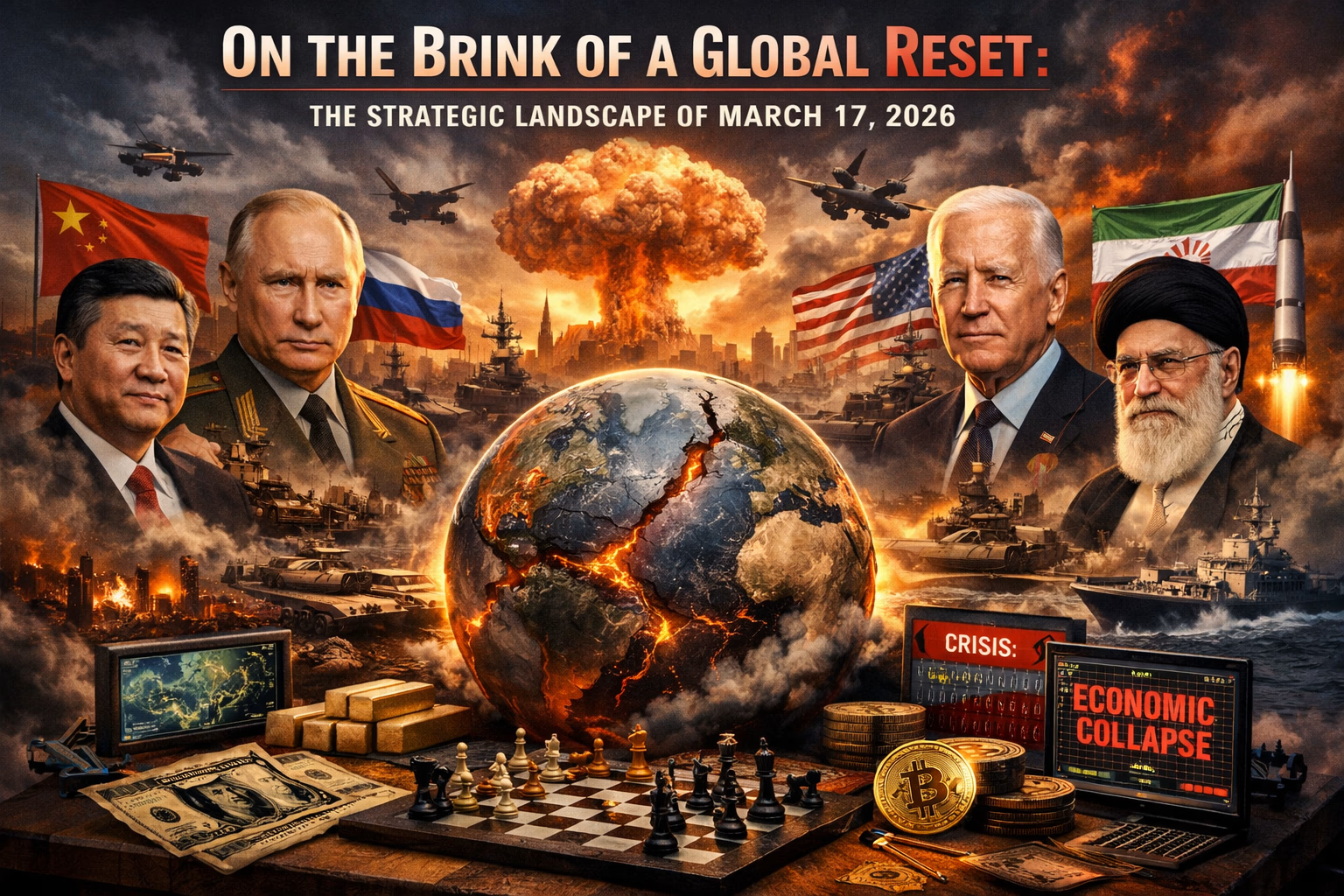
Tehran / Washington / Dubai – Today, March 17, 2026, the international order stands at its most precarious junction in decades. As the conflict between the U.S.-Israel alliance and Iran enters its 18th day, the geopolitical “firewall” that once protected the global economy and civilian aviation has effectively collapsed.
The Expansion of the Conflict Zone
What began as targeted exchanges has now spiraled into a regional contagion. For the first time, the “neutrality” of the Gulf states—specifically the UAE, Qatar, and Saudi Arabia—is being tested by fire.
- Airspace Paralysis: The brief but significant closure of UAE airspace following missile and drone alerts in Dubai and Doha has sent shockwaves through the aviation industry. While partial operations have resumed, the image of these global hubs as “safe harbors” has been severely tarnished.
- The Human Toll: Reports from Amnesty International regarding casualties in Minab and Arak, including the tragic loss of over 170 individuals at a primary school, have shifted the narrative. The international community is no longer just watching a strategic chess match; they are witnessing a humanitarian catastrophe that is fueling global anti-war sentiment.
The Strait of Hormuz: A Chokehold on Progress
The most critical development today involves the Strait of Hormuz. With shipping nearly paralyzed, the world’s “energy artery” is constricted.
- The Trump Doctrine: U.S. President Donald Trump’s urgent appeal to allies for a joint naval task force underscores the desperation to keep the strait open.
- The $100 Barrel: Global crude oil prices have surged past the $100-per-barrel mark. For the average consumer in Europe, Asia, and the Americas, this translates to an immediate and painful spike in inflation, impacting everything from groceries to electricity bills.
The Soft Power Fallout
War is now spilling into the cultural and sporting arenas. The Iranian Football Federation’s negotiations with FIFA to move their World Cup fixtures from the U.S. to Mexico highlights a total breakdown in diplomatic trust. When even the “Universal Language of Sports” is fractured, it signals a long-term ideological decoupling between the East and the West.
Analysis: Is There a Road Back?
The events of March 17, 2026, prove that modern warfare knows no borders. The global economy is currently in a state of “induced coma,” waiting to see if diplomacy can provide a late-stage intervention. As investors flee to “Safe Havens” like Gold, the fundamental question remains: Can the world afford a third Great War in the name of regional hegemony?
Reported by: Expert Journalist (Global Affairs)