Key Takeaways
-
Ann Grosmaire, a 19-year-old from Florida, was tragically killed by her boyfriend, leaving her family devastated.
-
Instead of pursuing the harshest punishment, her mother chose the path of restorative justice.
-
The process allowed direct dialogue between the victim’s family and the offender to confront the impact of the crime.
-
Restorative justice focuses on healing, accountability, and repairing harm rather than purely punitive measures.
-
The mother’s decision has sparked worldwide discussion about empathy, forgiveness, and alternative justice systems.
-
The case highlights how families coping with violent loss may seek healing beyond traditional court processes.
A Tragedy That Changed a Family Forever
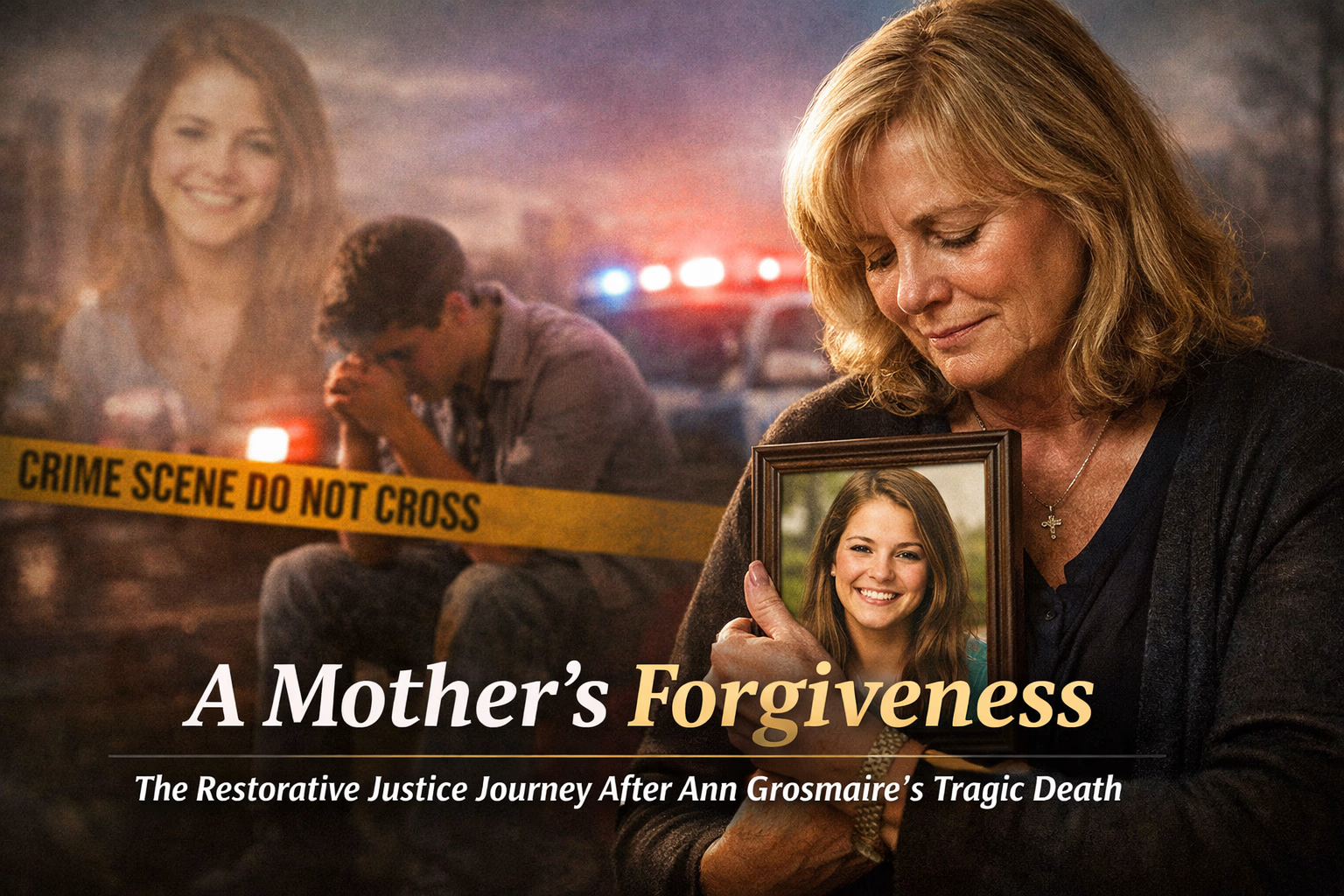
The killing of Ann Grosmaire, a vibrant 19-year-old from Florida, remains one of the most heartbreaking examples of how sudden violence can shatter a family. Ann’s life was cut short after she was fatally shot by her boyfriend during a confrontation, leaving her parents and loved ones facing unimaginable grief.
In most cases of violent crime, families understandably seek the harshest legal punishment possible for the offender. But Ann’s mother chose a path that surprised many: instead of focusing solely on retribution through the traditional legal system, she embraced restorative justice, an approach designed to promote healing, accountability, and reconciliation.
Her deeply personal journey shared through a heartfelt letter written to her late daughter has since inspired discussions around the world about forgiveness, empathy, and how justice systems can better support victims and their families.
Choosing Healing Over Revenge
The loss of a child is often described as one of the most devastating experiences a parent can endure. For Ann’s mother, the pain was overwhelming. Yet, rather than allowing anger and vengeance to define her future, she sought a different path one that aimed to restore a sense of humanity to an otherwise tragic situation.
Through the restorative justice process, Ann’s family agreed to participate in structured conversations with the young man responsible for her death. These meetings were carefully facilitated to ensure that all parties could speak openly about the emotional consequences of the crime.
For the family, the process created an opportunity to ask questions that the courtroom often leaves unanswered: Why did this happen? What was he thinking? Did he understand the depth of the loss he caused?
Facing the person responsible for such a devastating act required immense courage. But for Ann’s mother, it also became a step toward emotional healing and understanding.
What Is Restorative Justice?
Unlike traditional criminal justice systems that emphasize punishment, restorative justice focuses on repairing harm caused by crime. The model centers around three key questions:
-
Who has been harmed?
-
What are their needs?
-
Who is responsible for addressing those needs?
Instead of viewing crime solely as a violation of law, restorative justice recognizes it as a violation of people and relationships.
In serious cases like the death of Ann Grosmaire, the process often includes victim-offender dialogue, where victims or their families meet directly with offenders. These conversations aim to create accountability while giving victims the chance to express their pain and receive acknowledgment from the person responsible.
For many participants, the experience can be emotionally intense but also deeply transformative.
A Difficult but Powerful Path
The decision made by Ann’s mother was not without criticism or confusion. Many people struggle to understand how a parent could sit across from the person who ended their child’s life and speak of forgiveness.
However, supporters of restorative justice emphasize that forgiveness in this context does not excuse the crime. Instead, it can help victims reclaim control over their healing process.
By confronting the offender directly, victims can express the real human consequences of violence—something that legal proceedings often fail to convey fully.
For Ann’s family, this approach allowed them to focus on preserving their daughter’s memory while freeing themselves from the consuming weight of anger.
Expert Perspective on Restorative Justice
Experts in criminal justice reform say cases like this illustrate the potential benefits of restorative justice programs.
According to Dr. Evelyn Reed, a sociologist specializing in criminal justice reform at Global University, traditional legal systems often overlook the emotional needs of victims.
“Punishment alone rarely addresses the trauma experienced by victims and their families,” Dr. Reed explains. “Restorative justice provides a framework where healing and accountability can coexist.”
She adds that while the process may not be suitable for every case, it offers victims an opportunity to play a meaningful role in the resolution of the crime.
“Forgiveness in this context is not about forgetting or minimizing what happened,” she says. “It is about releasing the burden of hatred and finding a way to move forward.”
A Story That Resonates Worldwide
The story of Ann Grosmaire and her mother’s remarkable choice continues to resonate with audiences around the world. It challenges deeply rooted assumptions about justice, punishment, and the human capacity for compassion.
While many families facing similar tragedies may choose different paths and rightly so this case demonstrates that healing can take many forms.
For some, justice means seeing the offender punished to the fullest extent of the law. For others, it may involve confronting the harm directly and seeking reconciliation.
Ann’s mother chose the latter, and her decision has become a powerful example of how empathy and forgiveness can emerge even in the aftermath of unimaginable loss.
A Legacy Beyond Tragedy
Although Ann Grosmaire’s life was tragically cut short, her story continues to inspire conversations about how societies respond to crime and grief.
Her family’s journey highlights a profound truth: while justice systems can punish wrongdoing, true healing often requires something deeper understanding, accountability, and sometimes, extraordinary forgiveness.
As discussions about criminal justice reform continue worldwide, the Grosmaire family’s experience stands as a powerful reminder that even in the darkest moments, the human capacity for compassion can offer a path toward healing.