

Key Takeaways
- The United States and Japan have finalized a landmark $40 billion agreement to develop advanced small modular nuclear reactors.
- The joint venture involves corporate giants GE Vernova and Hitachi, with new facilities planned in Tennessee and Alabama.
- Japanese Prime Minister Sanae Takaichi proposed a strategic joint oil-stockpiling initiative to stabilize energy markets.
- The economic summit occurred against a backdrop of geopolitical strain in the Middle East, which threatens global supply chains.
- This energy deal is a core component of a broader $550 billion trade commitment previously pledged by Tokyo.
Introduction
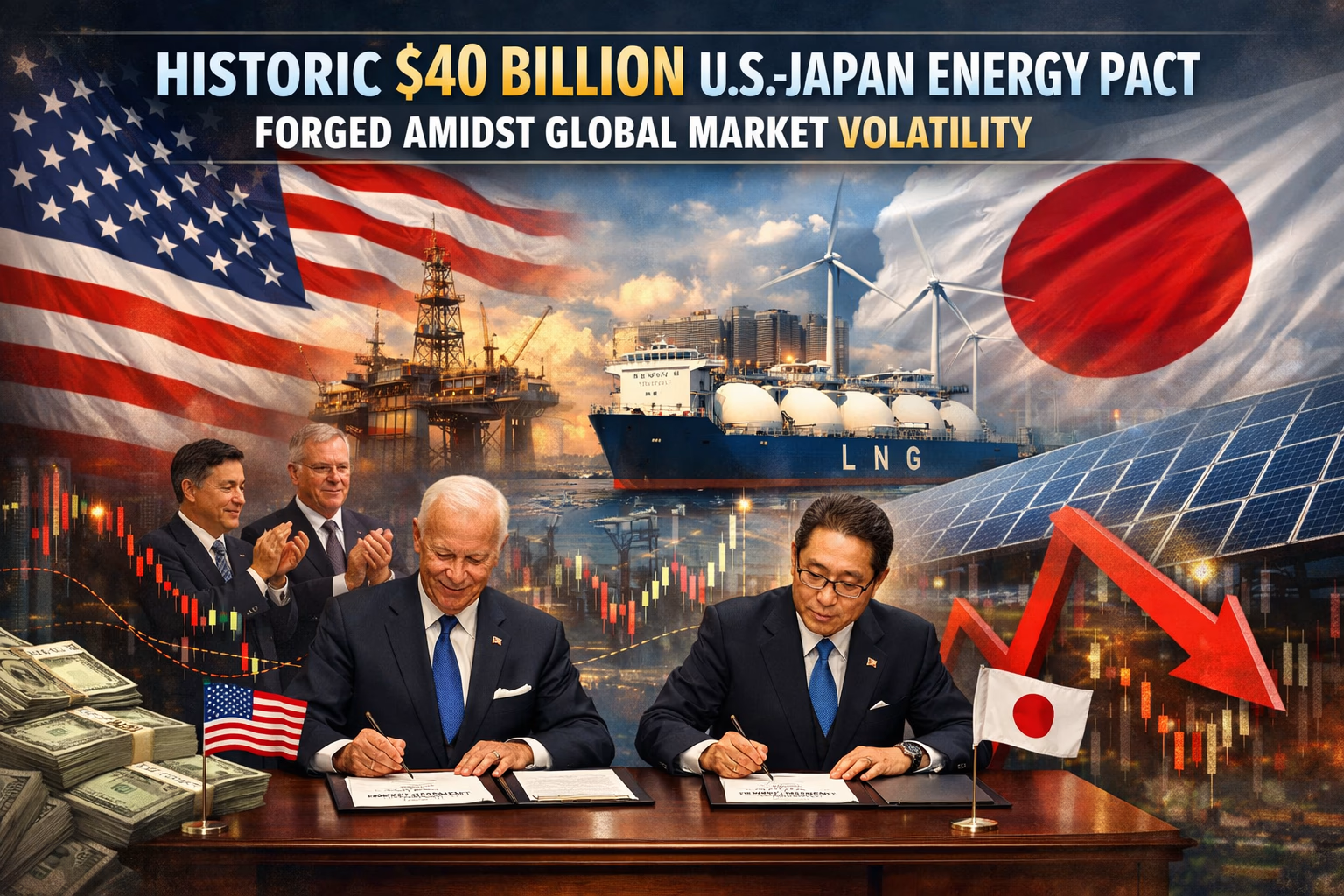
As geopolitical instability sends shockwaves through global markets, the United States and Japan have moved to secure their economic futures by signing a monumental $40 billion energy and technology agreement. Finalized during a highly scrutinized meeting at the White House between President Donald Trump and Japanese Prime Minister Sanae Takaichi, the deal pivots sharply toward energy independence. While media attention has heavily focused on the tense diplomatic exchanges regarding the Middle East, investors and market analysts are zeroing in on this massive bilateral trade pact, which promises to reshape the international energy landscape.
Powering the Future: The GE-Hitachi Mega Deal
At the heart of this new economic alliance is a massive infrastructure initiative aimed at revolutionizing nuclear power. The $40 billion contract paves the way for a major collaboration between GE Vernova and Japan’s engineering powerhouse, Hitachi. Together, they will manufacture and deploy advanced small modular reactors (SMRs).
Unlike traditional nuclear plants, SMRs are cheaper to build, scalable, and offer a safer, more consistent alternative to fossil fuels. The new manufacturing hubs will be established in Tennessee and Alabama, promising thousands of high-paying industrial jobs in the U.S. while allowing Japanese tech firms to expand their footprint in North America. For Tokyo, this is a strategic deployment of capital that fulfills a significant portion of its promised $550 billion foreign direct investment into the American economy.
Shielding Economies from Middle East Shocks
The urgency behind this economic pivot is directly linked to the escalating conflict involving Iran and the critical Strait of Hormuz. Japan, the world’s fourth-largest economy, currently relies on the Middle East for approximately 95% of its crude oil imports. Any disruption in this maritime chokepoint could trigger an energy crisis in Asia and send global inflation soaring.
To mitigate this severe economic vulnerability, Prime Minister Takaichi introduced a visionary joint oil-stockpiling framework. By purchasing and reserving crude oil directly from the United States, Japan aims to create a vital buffer against price spikes and supply chain collapses. This arrangement not only provides Japan with economic security but also guarantees a lucrative, long-term buyer for American energy exporters.
Market Reactions and the “America First” Impact
Financial markets reacted positively to the trade announcements, brushing off the diplomatic friction generated by President Trump’s controversial invocation of the 1941 Pearl Harbor attack during the press briefing. Wall Street views the Trump-Takaichi dynamic as highly transactional but economically fruitful. By pressuring allies to contribute more financially to their own security, the Trump administration is successfully brokering deals that heavily favor U.S. industrial growth and energy dominance.
Expert Insight / Analysis
From an economic standpoint, this bilateral summit is a masterstroke in crisis management. By intertwining American industrial capacity with Japanese technological expertise and capital, both nations are insulating themselves from the unpredictable oil markets. The GE Vernova and Hitachi partnership is particularly significant; it signals a long-term commitment to clean, reliable energy infrastructure that will outlast current geopolitical crises. Moving forward, global investors will likely view the U.S.-Japan economic corridor as a safe haven amidst international turbulence.
Conclusion
The $40 billion nuclear pact and the strategic oil-stockpiling initiative represent a defining moment in modern trade relations. While political commentators focus on the abrasive rhetoric of the summit, the underlying economic reality is one of deep, mutually beneficial integration. As the Middle East conflict continues to threaten global supply chains, this robust financial and energy alliance between Washington and Tokyo stands as a critical stabilizer for the global economy.