

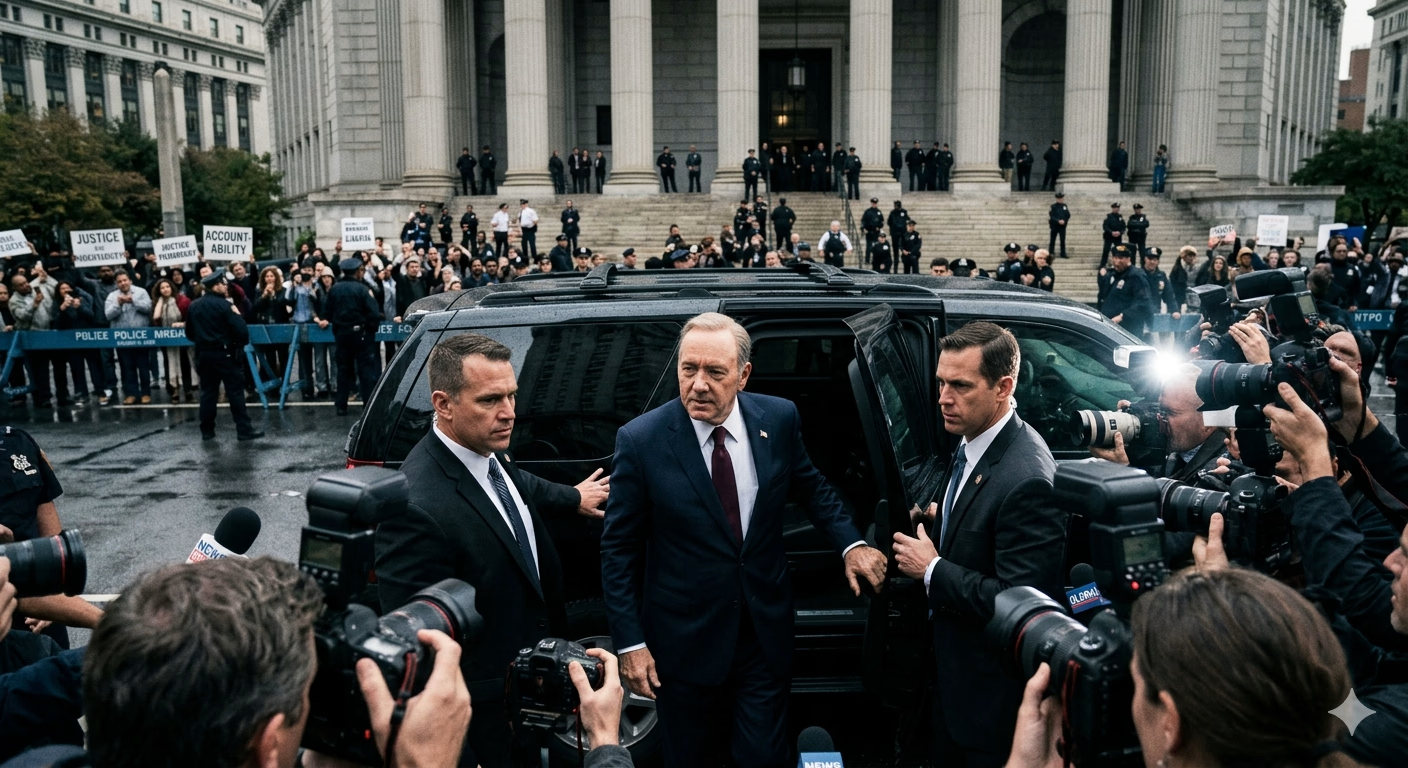
Key Takeaways: Former U.S. President Donald Trump pleaded not guilty to 34 felony counts in a Manhattan courtroom. Charges relate to falsifying business records to conceal alleged hush-money payments during his 2016 presidential campaign. The event marks the first time a former or sitting U.S. President has faced criminal charges, setting a historic precedent. The legal battle is expected to be protracted and will likely intersect with the 2024 presidential election cycle.
The hallowed halls of American justice witnessed an unprecedented chapter recently as former U.S. President Donald Trump appeared in a Manhattan courtroom, entering a not-guilty plea to 34 felony counts. This historic moment marks a watershed in the nation’s political and legal landscape, as a former commander-in-chief faces criminal charges for the very first time.
A Day of Historic Firsts in New York
On a day laden with palpable tension and intense media scrutiny, Trump arrived at the New York courthouse, where he was formally arraigned before Justice Juan Merchan. The charges, brought forth by Manhattan District Attorney Alvin Bragg, center on allegations of falsifying business records. Prosecutors contend these records were manipulated to conceal a series of payments made to silence individuals with potentially damaging information during the high-stakes 2016 presidential campaign.
The indictment details accusations that Trump orchestrated a “catch and kill” scheme, primarily involving a payment to adult film star Stormy Daniels. Prosecutors allege this payment, facilitated by former personal attorney Michael Cohen, was then disguised as legal expenses in company records, thereby creating a fraudulent paper trail. The core of the prosecution’s argument posits that these actions amounted to a broader conspiracy to unlawfully influence the 2016 election.
The Broader Implications and Political Fallout
Beyond the immediate legal ramifications, this event casts a long shadow over the future of American politics. Donald Trump, who has already declared his candidacy for the 2024 presidential election, now faces the dual challenge of navigating a complex legal defense while simultaneously campaigning for the nation’s highest office. The intersection of these two colossal battles is uncharted territory, promising a period of profound uncertainty and robust debate.
Political analysts are meticulously dissecting how these proceedings might impact public opinion, both within his Republican base and among independent voters. While supporters have largely rallied, decrying the charges as a politically motivated witch hunt, critics view the indictment as an affirmation of the principle that no one, not even a former president, is above the law. This domestic legal quagmire could also subtly shift the global perception of U.S. stability and governance, potentially influencing how the nation engages with pressing international issues, such as the escalating Iran–United States conflict.
The Road Ahead: Legal and Political Battles Converge
The legal journey ahead is expected to be protracted, with numerous motions, hearings, and potentially a trial that could stretch well into, or even beyond, the crucial 2024 election cycle. Trump’s legal team has vehemently denied any wrongdoing, vowing to fight the charges vigorously and asserting that the payments in question were not illegal campaign contributions but legitimate personal expenditures.
This saga serves as a stark reminder that even the grandest political narratives and complex legal confrontations often trace their origins back to a series of incremental decisions and actions, much like the profound impact described in our piece on the power of small, daily habits. The outcome of this unprecedented legal battle will undoubtedly reshape not only Donald Trump’s legacy but also the very fabric of American democracy, setting new precedents for accountability at the highest echelons of power. TrendsVoice will continue to provide in-depth analysis as this story unfolds.